


Frequency in Advertising: Its Definition and the Formula
Advertisers want their ads to be shown to the audience as many times as possible. Still, how many is too many? Ad frequency is a metric that helps advertisers understand this and achieve the right balance. In this glossary page, we explore the importance of calculating the ad frequency and how to do it.
What is Frequency in Advertising?
Ad frequency is a metric that shows how often an ad is shown to a unique user. Unlike ad reach, which tracks how many people are exposed to the ad, frequency measures how many times those same people are exposed to the ad during a set period, such as hourly, daily, or monthly.
For example, if 1,000 people each see your ad three times in a week, your frequency is three. This metric helps marketers understand if the message has enough visibility to stick, or if it’s been over-exposed.
What’s the Optimal Number of Impressions?
The ideal number of ad impressions can vary significantly by campaign goals. Yet, a common range for awareness is between 3 to 12 exposures over a period of time. For Facebook ads, for instance, a frequency of between 2 and 4 ensures the target demographic sees the ad on social media.
The ideal frequency will depend on the campaign goals: bottom-of-funnel campaigns may benefit from a lower ad frequency, while a high frequency ( 6 to 10 exposures a month) is better for brand building.
Still, finding the optimal frequency is not a one-size-fits-all solution, but to finding the point where the ads build recognition, without annoying the viewer.
How Do You Calculate the Ad Frequency?
The formula to calculate ad frequency:
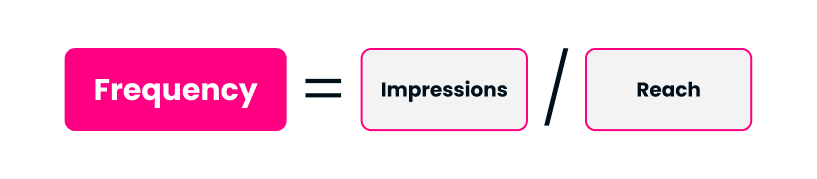
Impressions measure the total times the ad was served, while reach measures the number of unique users who saw it. Let’s see an example:
200,000 impressions divided by 5,000 users = a frequency of 4. Therefore, each user saw the ad an average of four times.
Good Frequency vs Bad Frequency
A good ad frequency is one that reinforces your message without overwhelming the user. Bad frequency happens when users feel bombarded by too many ads, which leads to ad fatigue or skipped ads. Ad fatigue occurs when a user becomes annoyed with seeing the same ad too many times.
A good frequency will depend on campaign goals; therefore, the same number that works for one campaign might feel too much for another.
Why is Ad Frequency Important?
Ad frequency can directly impact the campaign’s success. If the frequency is too low, the ads may never get seen. If the frequency is too high, users may tune out. When managed effectively, ad frequency strengthens brand recall, encourages engagement, and conversions.
Measuring ad frequency helps determine the optimal number of impressions. By measuring ad frequency, you can prevent an ad from appearing too often and becoming annoying to the user. You can also use this metric to prevent an ad from appearing too sparingly and failing to make an impact on the viewer.
Ad frequency helps marketers maximize the advertising budget. When measuring what the optimal frequency is to cause an impact on users, businesses can make data-driven decisions about their ad spending. Also, managing ad frequency helps control ad spending, especially when using frequency capping.
Tips to Optimize Ad Frequency
Finding the right balance of ad frequency is critical to maintain the impact of the campaign’s ads. Here are some tips you can use to optimize ad frequency.
Manage your budget. If the ad spending budget is limited, it is better to focus the ad frequency on fewer platforms instead of spreading it across different platforms.
Manage the frequency with automation. For instance, set a frequency cap. Setting a frequency cap can help prevent ad fatigue in users by limiting the number of times an ad can be shown to a unique user within a set time frame. You can use a frequency management tool like Google Ads and Facebook’s features, but using an advertising platform can simplify this task.
Test different frequencies. You can run multiple campaigns with different frequency caps to find which one works best. Monitor ad performance to check that your selected frequency delivers the results you expected. To do this, track related KPIs, such as click-through rate (CTR), conversion rate.
Another way to improve the ad frequency is to create and manage custom audiences. By doing this, you can ensure the ad is shown to the most relevant users and reduce the frequency for users who aren’t in the custom audience group.
