


Programmatic Advertising Definition and How It Works
Programmatic advertising replaces the traditional cycle of RFPs, negotiated rates, and insertion orders with software that buys and sells ad inventory through automated auctions, often via real-time bidding (RTB). Today, advertisers buy across digital out-of-home (DOOH), connected TV (CTV), retail media, search, and social. Yet each channel optimizes to its own in-platform metrics in an isolated dashboard, without a unified view of cross-channel budget performance.
This glossary page covers how the underlying tech works, how deals get structured, where programmatic runs today, and what coordinating a multi-channel buy requires.
What Is Programmatic Advertising?
Programmatic advertising is the automated buying and selling of digital ad inventory through real-time software auctions rather than human-negotiated insertion orders. An advertiser sets a budget, targeting criteria, and a bid strategy inside a demand-side platform. The software then bids on individual ad impressions as they become available, winning the ones that match its criteria at the best price, without a person approving each placement.
Video, CTV, audio, digital out-of-home, in-app, search, and social inventory can all be bought programmatically today, and the same underlying auction mechanics apply across each of them, even though the platforms and formats differ.
Benefits and Limitations of Programmatic Advertising
Programmatic advertising trades guaranteed ad spots for speed, reach, and precise targeting. That is a major benefit for marketers, but you still need to watch for a few downsides.
The benefits of programmatic advertising are:
- Efficiency at scale. You can run massive campaigns across millions of ad spots a day without adding extra staff or wasting time on manual paperwork.
- Granular targeting. Instead of placing ads in one generic spot, you can instantly target specific groups of people, page topics, or customer lists.
- Real-time optimization. If an ad isn’t performing well, you can change your budget, bids, or ad creative mid-campaign, without waiting for paperwork or new approval cycles.
- Cross-format reach. The same buying logic extends across display, video, CTV, audio, DOOH, and more, letting advertisers consolidate strategy across different formats.
- Measurable, transparent pricing. Auction dynamics produce clearer, more competitive pricing than negotiated flat rates.
Programmatic advertising Limitations:
- Walled-garden fragmentation. Major platforms (search, social, some retail media networks) run their own closed auctions with limited external visibility, so “programmatic” doesn’t mean one universal marketplace.
- Invalid traffic and fraud risk. Automated bidding at scale creates exposure to invalid traffic and click ad fraud if inventory isn’t properly vetted.
- Viewability gaps. Not every impression is seen by a person; viewability measurement is necessary to confirm delivery quality, not just volume.
Types of Programmatic Advertising
Programmatic advertising is grouped by how the ad is bought rather than what it looks like:
| Deal Type | How Pricing Works | Inventory Access | Best for |
| Open exchange | Live auction, floor price only | Unreserved, broad, unvetted by default | Maximum scale and reach at the lowest average cost |
| Private marketplace (PMP) | Live auction, invite-only | Curated publisher set, pre-negotiated access | Brand-safe scale with more inventory control than open exchange |
| Preferred deals | Fixed price, first-look, no auction | Reserved priority access, not guaranteed volume | Locking in rate and priority without committing to guaranteed volume |
| Programmatic guaranteed | Fixed price, fixed volume, no auction | Reserved and guaranteed, automated trafficking | Premium inventory bought like a direct buy, delivered like programmatic |
How Does Programmatic Advertising Work?
Real-time programmatic ad auctions happen almost instantly. Between opening a page and seeing an ad, an automated bidding process runs. Here is the step-by-step sequence:
- When a user loads a page or opens an app, an ad slot becomes available.
- The publisher’s supply-side platform (SSP) sends a bid request to connected exchanges and DSPs. This request includes details like the page topic, ad size, and permitted user signals.
- Each connected DSP checks the request against active campaigns’ targeting rules and decides whether, and how much, to bid.
- Interested DSPs respond with a bid price and the creative they’d serve if they win.
- The exchange or SSP selects the winner (typically the highest bidder) and calculates the final cost using the auction’s pricing rules.
- The winning creative renders in the ad slot before the user has finished loading the page.
For a deeper walkthrough of the buying side of this process, see What Is Programmatic Media Buying?
Where Programmatic Advertising Runs: Channels & Formats
While automated bidding works similarly behind the scenes, every ad channel is different. What changes from one platform to another is the ad format, how performance is measured, and how buys are executed.
Display & Native: The original programmatic formats (banner and native ads across websites and apps) bought via Open Exchanges, PMPs, or Programmatic Guaranteed deals.
Video & CTV: Video extends the same auction logic to pre-roll, mid-roll, and connected TV inventory. CTV in particular has become one of the fastest-growing programmatic categories as streaming replaces linear viewing.
Audio: Programmatic audio applies RTB to streaming audio and podcast inventory through dedicated audio SSPs and DSP integrations.
Digital Out-of-Home (DOOH): It brings programmatic buying to physical screens (billboards, transit, retail displays) with bidding tied to real-world triggers like weather, time of day or audience proximity rather than a single-user cookie.
Search: While search advertising runs its own auction logic, it is also managed alongside programmatic campaigns as cross-channel budgets and measurement converge.
Social & In-App: Meta, TikTok, and other social platforms run closed, walled-garden auctions that operate programmatically, but remain closed off to external DSPs.
Retail Media: Retail networks combine programmatic auctions with real sales data, allowing brands to bid on verified purchase history. While it is rapidly growing, it remains fragmented across individual retailer platforms.
Real-World Programmatic Advertising Examples
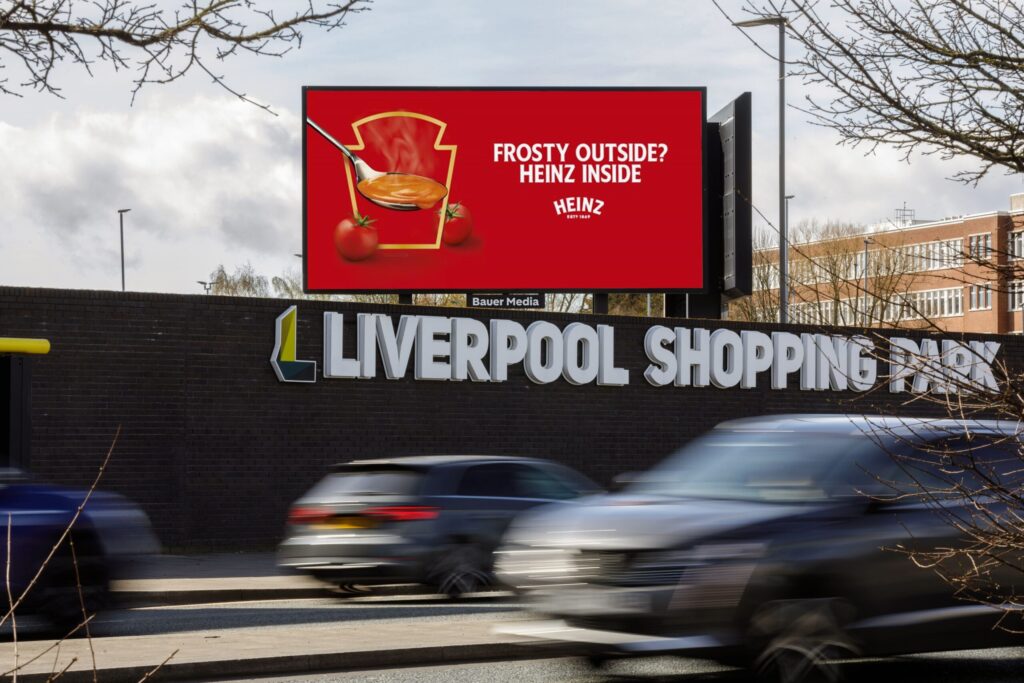
DOOH: Heinz. Heinz used programmatic digital out-of-home to dynamically serve soup ads when real-world triggers hit, like cold or rainy weather, demonstrating what contextual DOOH can do that a static billboard can’t.
Full details: Heinz Soup x Perion: Serving Comfort Through Programmatic DOOH.
CTV: Webroot. Webroot ran a campaign showing that TV ads can deliver massive scale alongside clear performance metrics, overcoming CTV’s reputation as a channel that is difficult to track.
Read the full case study: Webroot x Perion: Setting a New Standard for CTV Performance and Transparency.

Retail media + DOOH: Albertsons Media Collective. This partnership combined big-screen DOOH with Albertsons’ first-party retail data, connecting large-format reach to measurable, retail-attributed impact instead of treating the two as separate buys.
Full case study: Albertsons Media Collective x Perion: Big Screens, Measurable Impact.
