


Digital Advertising Campaign
Digital channels have become the primary way brands reach, engage, and convert their audiences. A digital advertising campaign is a coordinated effort across online platforms to promote a product, service, or message with measurable results. As businesses move away from traditional media, effective planning, execution, and optimization are now essential to marketing success.
What is a Digital Advertising Campaign?
A digital advertising campaign is a series of structured ad activities executed across digital channels such as social media, search engines, display networks, video platforms, and connected TV. These campaigns aim to reach specific audiences with targeted messages, often leveraging real-time data and automation to maximize performance. Unlike traditional campaigns, digital advertising allows for more precise targeting, dynamic content, and in-depth analytics.
What are the Elements of a Digital Advertising Campaign?
A well-structured digital advertising campaign is built on several key components that work together to deliver measurable results.
It starts with goal setting, where marketers define clear, specific objectives, whether it’s increasing brand awareness, driving website traffic, generating leads, boosting app installs, or achieving direct sales. These goals shape every subsequent decision, from creative messaging to platform selection.
Next is audience segmentation and targeting. Campaigns are crafted to reach well-defined groups based on demographics, behaviors, interests, or intent. Data-driven tools allow marketers to narrow their focus and deliver personalized messages that are more likely to resonate with each segment.
Creative assets play a central role in capturing attention and driving engagement. This includes the ad copy, visuals, videos, or interactive formats tailored to match both the platform and the expectations of the target audience. The creative must not only reflect the brand’s voice but also align with user context and behavior.
Choosing the right channels and platforms is equally important. Depending on campaign goals and audience habits, ads may run across Google Search and Display, Meta platforms like Facebook and Instagram, video environments like YouTube, programmatic ad networks, or connected TV services. Each platform offers different strengths, formats, and reach.
Budget and bidding strategies must be aligned with campaign priorities. Marketers define how much they’re willing to invest and select bidding models, such as cost-per-click (CPC), cost-per-thousand impressions (CPM), or cost-per-acquisition (CPA), based on desired outcomes and available resources.
Finally, measurement and optimization ensure that performance is continuously monitored and improved. Key performance indicators (KPIs) such as CTR, CPA, conversion rate, and return on ad spend (ROAS) guide real-time adjustments. Ongoing testing and analysis help fine-tune creative, audience targeting, and budget allocation to maximize effectiveness.
How does a Digital Advertising Campaign Work?
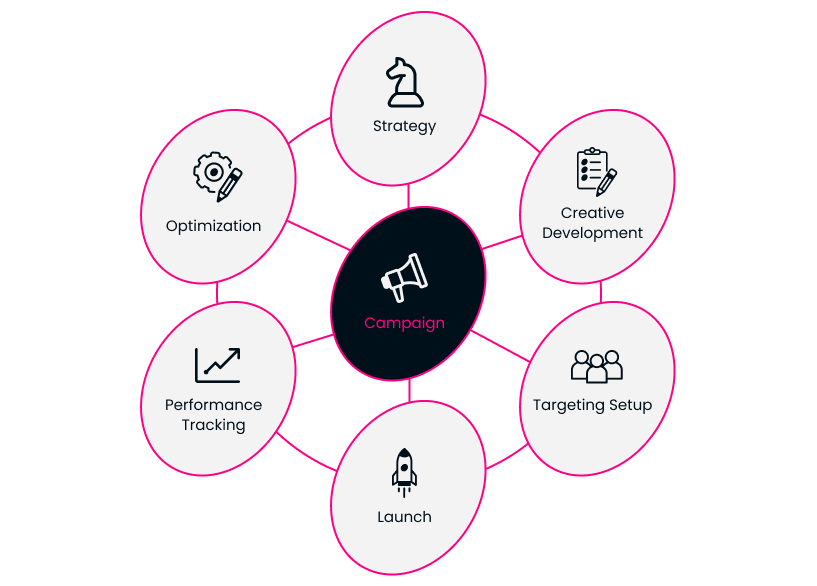
Digital advertising campaigns usually begin with strategy development, followed by the creation of assets and targeting parameters. Once launched, ad platforms automatically deliver ads to the selected audience using bidding algorithms.
Throughout the campaign, real-time performance data is collected to allow ongoing optimization, adjusting bids, swapping creatives, or refining targeting based on what works best.
Digital Marketing Campaigns’ Types
Digital advertising campaigns come in many forms, each tailored to specific goals, audiences, and platforms.
Search advertising focuses on intent by displaying text-based ads on search engines like Google. These ads target specific keywords, making them effective for capturing high-interest users actively looking for a product or service.
Display advertising uses banner and rich media formats to capture attention on websites and apps. While not always intent-driven, display ads help build brand recognition and maintain visibility across the web.
Social media campaigns leverage the visual and interactive nature of platforms such as Facebook, Instagram, TikTok, and LinkedIn. These campaigns can be finely targeted based on user demographics, behaviors, and interests, making them highly effective for both brand building and conversions.
Video and connected TV (CTV) advertising deliver immersive storytelling through platforms like YouTube or smart TVs. These formats are especially powerful for raising brand awareness and engaging audiences in a non-disruptive, content-rich environment.
Programmatic advertising automates the media buying process using demand-side platforms (DSPs). It enables real-time bidding and efficient ad placement across a wide digital inventory, allowing advertisers to scale and optimize quickly.
Retargeting campaigns re-engage users who have previously interacted with a brand’s website or app. By reminding potential customers of their earlier interest, retargeting increases the chances of conversion and keeps the brand top-of-mind.
Benefits of Digital Advertising Campaigns
Digital advertising campaigns provide marketers with tools and capabilities that traditional channels simply can’t match. One of its main advantages is advanced targeting. Advertisers can segment audiences based on demographics, location, behavior, interests, or intent, ensuring messages reach the right people at the right time. This precision leads to more relevant, personalized experiences that drive better engagement and higher conversion rates.
Another key benefit is real-time adaptability. Campaigns can be adjusted on the fly based on performance data, allowing marketers to pause underperforming ads, shift budgets to higher-performing channels, or test new creative variations without waiting for long production cycles. This level of agility helps maximize return on ad spend and respond quickly to changing market conditions or consumer behaviors.
Digital campaigns also enable marketers to measure the campaign’s impact easily. From click-through rates and impressions to conversions and cost-per-acquisition, every aspect of performance can be tracked, analyzed, and optimized. This data-driven approach empowers marketers to make informed decisions and continually refine their strategies.
For publishers, digital campaigns open up monetization opportunities through programmatic ad placements, direct partnerships, and audience-based offerings. The ecosystem benefits both sides through more efficient media buying and better audience reach.
Limitations of Digital Advertising Campaigns
While digital advertising offers many benefits, it also comes with challenges that can impact campaign success. One of the most common issues is ad fatigue. When audiences see the same ads too often, they become less responsive, leading to lower engagement and declining performance. Maintaining fresh, varied creative is essential to keep attention and avoid audience burnout.
Data privacy regulations have also introduced a challenge to digital targeting. Laws such as GDPR and CCPA limit the way marketers can collect and use consumer data, requiring greater transparency and consent management. As third-party cookies phase out, many advertisers must rethink their strategies to balance personalization with privacy.
Ad blockers pose another obstacle, especially among tech-savvy users. These tools prevent ads from being displayed entirely, reducing campaign reach and effectiveness. Creative strategies and non-intrusive formats are necessary to navigate this challenge.
Digital campaigns often depend heavily on third-party platforms such as Google, Meta, or programmatic ad networks. This platform dependency can lead to issues like fluctuating ad costs, changing algorithms, or sudden policy updates that affect campaign performance. Inaccurate targeting, weak messaging, or misaligned creative can also result in wasted spend and missed opportunities.
Examples of Successful Campaigns
At Perion, we have achieved success in several digital advertising campaigns, such as:
Fiji Airways used Perion’s connected TV solution to run a high-impact awareness campaign across premium streaming content. With advanced targeting and high-quality video placements, the airline achieved a +14% lift in brand consideration. The campaign used data-driven dayparting and frequency capping to optimize engagement and viewing completion rates.
Lululemon partnered with Perion to run a digital out-of-home (DOOH) campaign combined with mobile retargeting. Using real-time footfall data, the campaign increased store visits by +68%, proving the value of integrated cross-channel strategies.
