


The average user is flooded with ads several times a day, trying to get their attention. Audience targeting allows brands to deliver the right message to the right people at the right time. By segmenting specific groups based on behaviors, interests, and demographics, digital marketers can cut through the noise and connect with consumers who are most likely to engage.
Studies show that targeted ads have a click-through rate three times higher than non-targeted ads and can increase brand engagement by up to 80%. Advancements in technology have improved targeting methods, allowing businesses to personalize their campaigns at an unprecedented level. From demographic and behavioral targeting to contextual and geographic strategies, each type offers unique benefits that can significantly boost campaign performance.
This article explores the main types of audience targeting and why they are crucial in today’s competitive digital landscape.
Key Highlights
- Marketers can target audiences according to specific demographics, behaviors, and interests.
- Some targeting methods, such as behavioral targeting, search, and psychographic targeting, use the consumer’s online search or shopping habits and interests to refine their message to them.
- Others, like contextual or geotargeting, focus on the user’s surrounding context or location to target their messaging.
- Demographic targeting, on the other hand, categorizes users by age and appeals to unique interests at each life stage.
- Audience targeting methods such as site retargeting, predictive targeting, and in-market audiences leverage the user’s current and past behavior and activities to predict future behavior and refine the targeting.
Behavioral Targeting
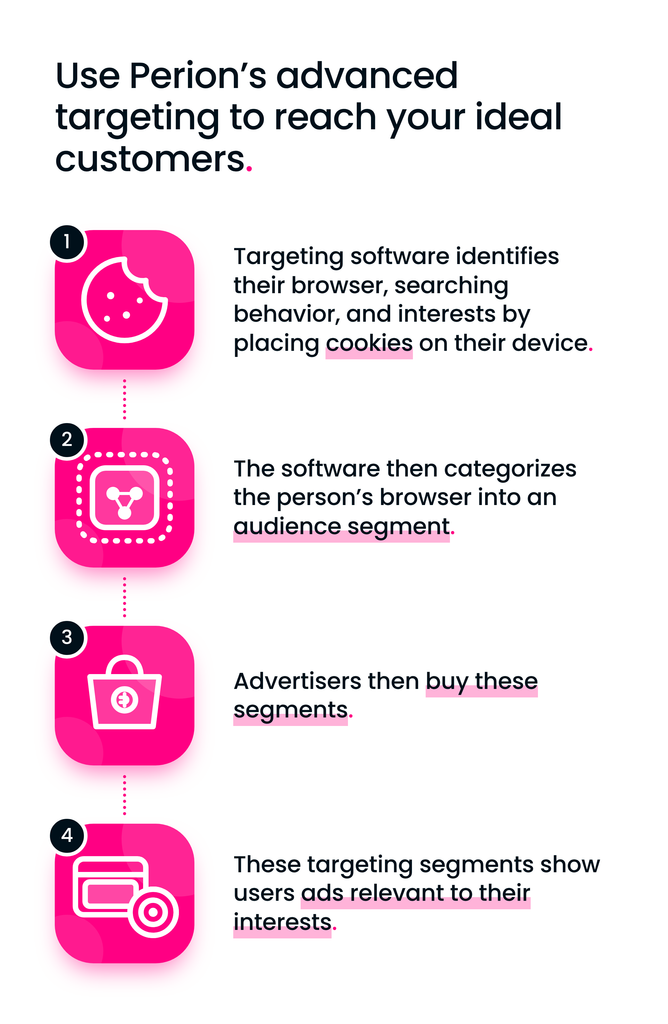
In behavioral targeting, customers are segmented based on their online behavior. Marketers will look at factors such as which pages they visited, which links they clicked, their online purchases, and what they searched for online. Often, marketers combine location and in-store purchases into the mix.
Behavioral targeting software groups visitors with similar behaviors into defined audience segments. Advertisers target these segments with relevant ads and content. Retargeting ads are an example of behavioral targeting.
Search Targeting
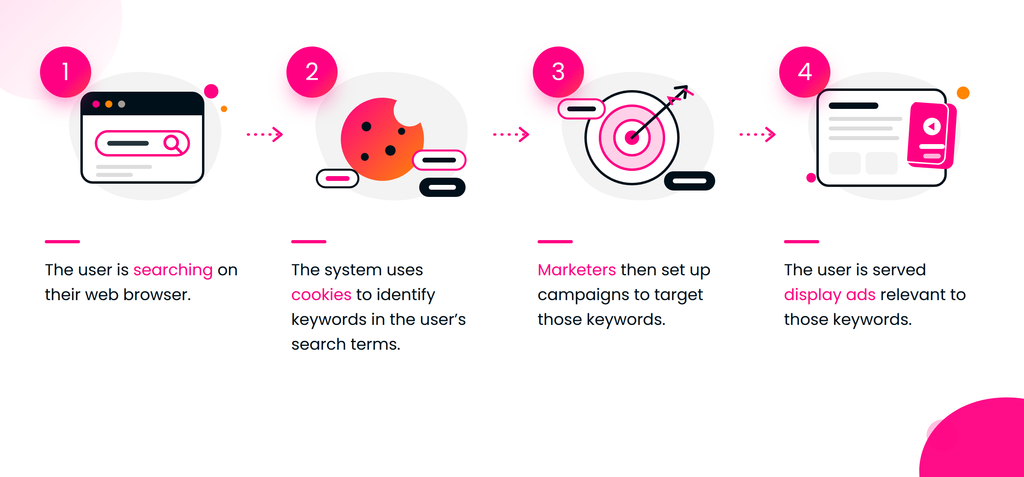
Search targeting is a digital marketing strategy in which ad servers display ads to users based on their keyword search behavior. This method uses the intent behind search queries to connect users to potential products that may answer their search terms. For instance, users who search for “adjustable standing desks” may get ads from furniture retailers. By doing so, retailers ensure their ads reach an audience interested in what they offer.
This strategy is particularly effective as a top-of-the-funnel approach. It aims to engage users early in their purchase journey.
Contextual Targeting
Contextual targeting software analyzes keywords, phrases, and content themes to ensure ads align with the viewer’s interests.
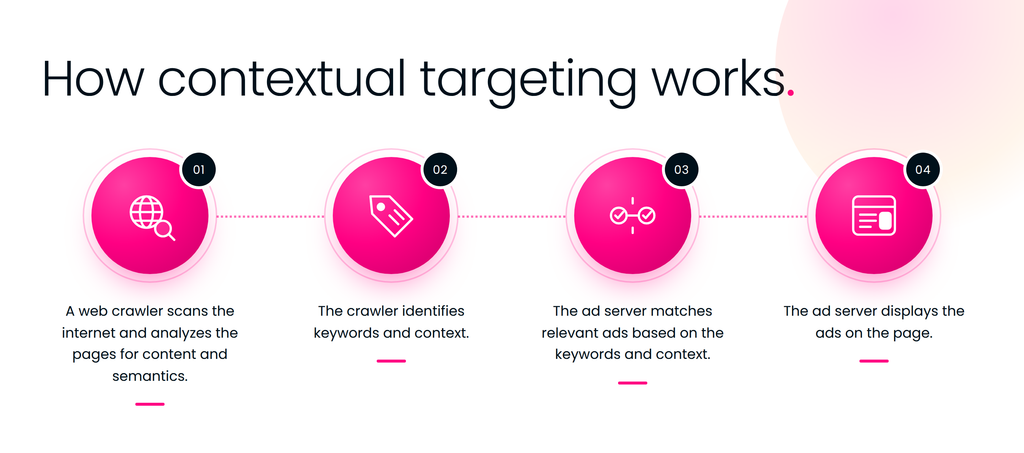
In contextual targeting, ads are displayed based on the content of a website or page, ensuring they are relevant to the viewer’s current interests. That’s the reason why when you browse for a cake recipe, you get ads for cookware. Unlike behavioral targeting, which relies on past online behavior, contextual targeting is based on the content a person is viewing at the moment, allowing marketers to respond to interests as they arise.
This type of targeting is based on the premise that if a person is engaged with content on a specific topic, they are more likely to be interested in ads for related products or services. Contextual targeting software analyzes keywords, phrases, and content themes to ensure ads align with the viewer’s interests, thus producing an engaging, non-intrusive user experience. This targeting approach gives advertisers an alternative to serving relevant ads in a cookieless landscape.
An example of contextual targeting is the “Custom Audience” targeting in the Lululemon campaign run by Zenith agency and Perion. The campaign targeted Lululemon’s core audience, women aged 18-34 interested in health, fitness, and activewear, and reached them through contextually relevant outdoor screens in related environments.
Site Retargeting
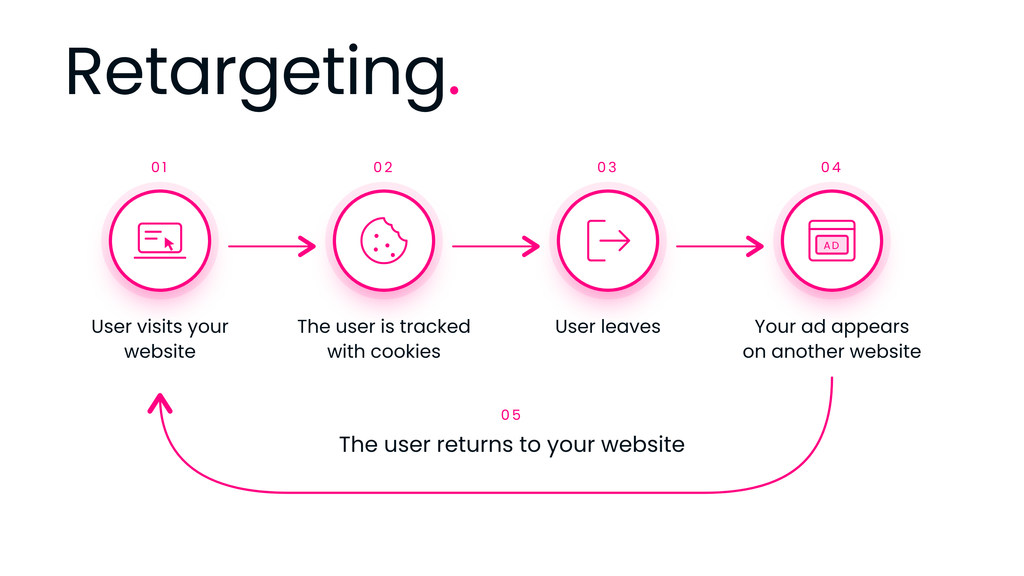
Site retargeting is a digital marketing strategy that allows businesses to re-engage users who visited the website but did not complete a purchase or another desired action. The site retargeting software tracks users with cookies, which are then used to serve them targeted ads when they visit other websites. The goal is to remind them of the products or services they are interested in.
For instance, a user visits an online cosmetics store, adds a night cream to their cart, but doesn’t complete the purchase. Marketers can use site retargeting to display ads for the night cream across various platforms, reminding the user about the product and encouraging them to return and complete the transaction. This approach is highly effective, with research showing that a retargeting strategy can increase website traffic by up to 700%.
Examples of retargeting can be found on almost all online retailers. These stores use personalized retargeting ads to remind customers of abandoned carts, resulting in a significant increase in sales. Site retargeting is essential for maximizing the value of every website visit, turning casual browsers into loyal customers by keeping the brand top of mind throughout their online journey.
Predictive Targeting
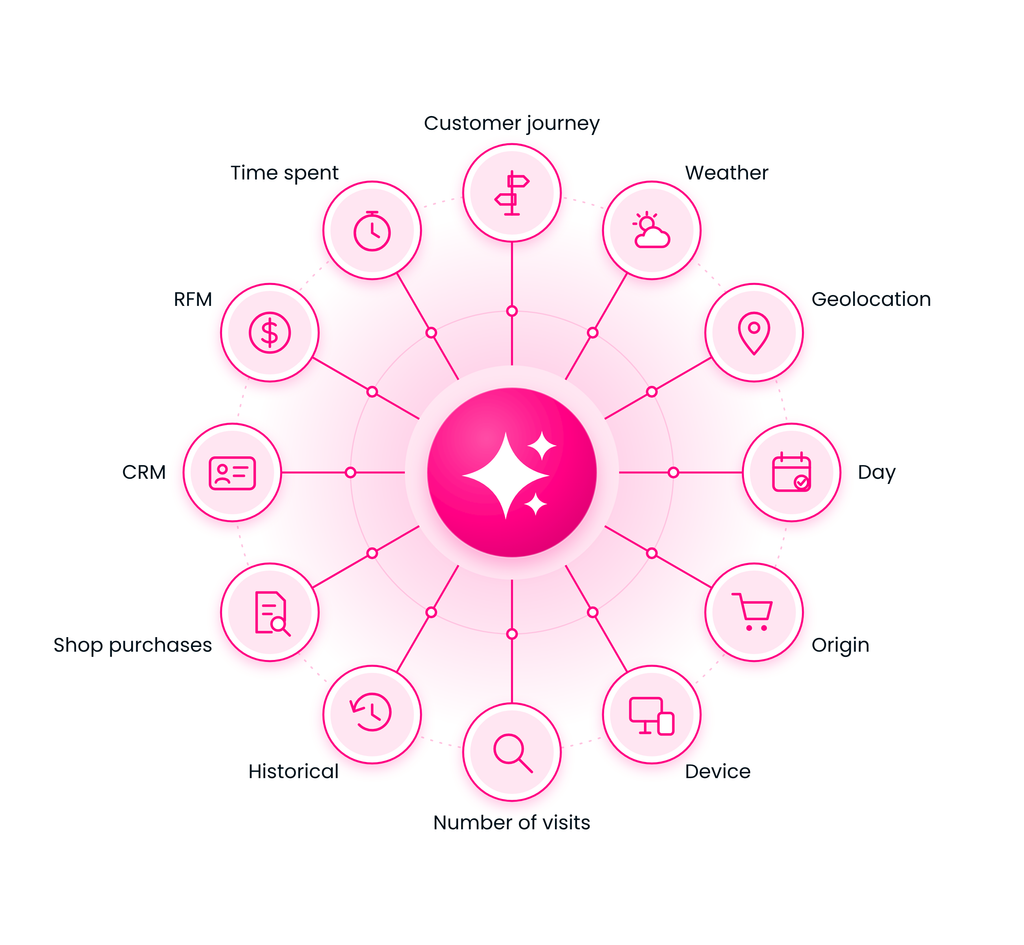
Predictive targeting uses advanced analytics, including AI and machine learning, to anticipate future consumer behaviors based on past data. By analyzing historical interactions, purchasing patterns, and demographic information, businesses can predict what products or services a customer might be interested in and target them with highly relevant ads.
For example, an online retailer might use predictive targeting to identify customers who have previously bought running shoes and are likely to be interested in athletic apparel. By serving these customers targeted ads for new sportswear collections, the retailer can significantly boost conversion rates.
While predictive targeting helps identify likely audience behaviors, Outmax takes the next step by acting on those signals in real time. Perion's AI execution agent applies a custom, brand-specific AI algorithm to every campaign, continuously optimizing media delivery based on live performance data, business goals, and KPIs to maximize outcomes.
In-market Audiences
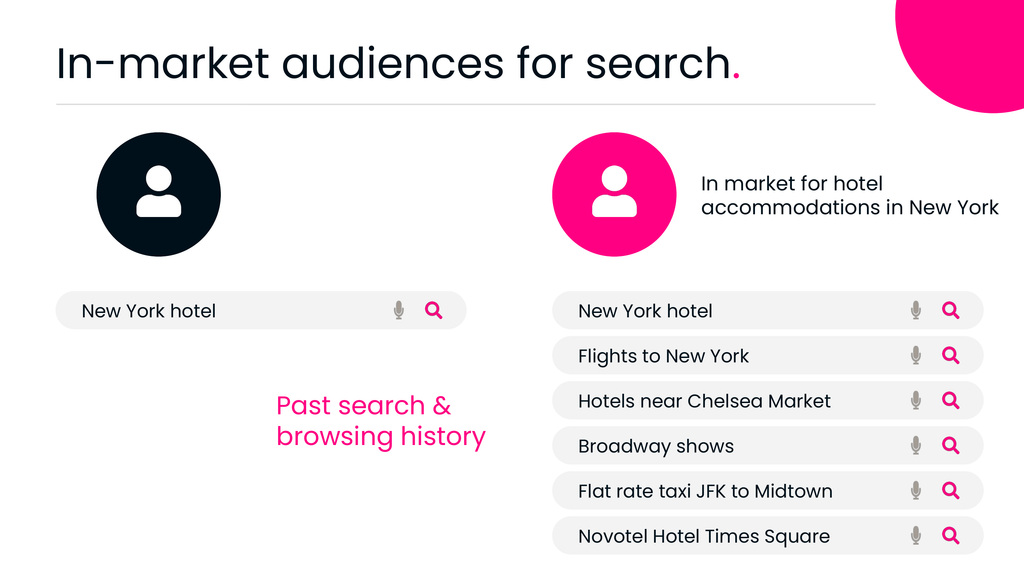
In-market audience targeting is a digital marketing strategy that allows you to reach users who are researching products with the active intention to buy. The method draws on behavioral data and insights to reach customers at the most likely time to make a purchase.
This targeting method is useful for users further down the funnel who have purchase intent. This method enables companies to allocate their ad spending more efficiently by focusing on users who are further down the purchasing funnel.
For instance, if users have been searching for reviews, price comparisons, and product details about smartphones, they would be placed in the “in-market” segment for smartphones. Smartphone brands can target those users with specific ads to increase the likelihood of conversions.
Take your campaigns further with Perion, turning in-market signals into real-time execution. Request a demo.
Geotargeting
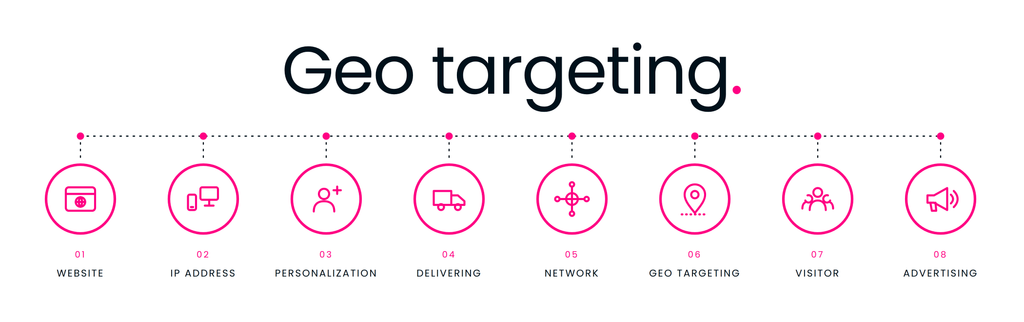
In geotargeting, marketers deliver content or advertisements to users based on their geographic location. This approach allows brands to tailor their campaigns to specific regions, cities, or even neighborhoods, ensuring the right message reaches the right audience at the right time.
Geotargeting involves using a user’s location data, such as their IP addresses, GPS signals, or Wi-Fi connections, to serve ads or content relevant to their geographical area. This technique helps marketers customize their campaigns based on regional preferences, cultural nuances, or local events. For instance, a hotel might use geotargeting to offer discounts to people traveling near their location. Retailers might promote in-store sales to nearby shoppers.
One example of a successful geotargeting campaign is Perion’s campaign for Helena Rubinstein in Hong Kong. The campaign’s goal was to drive people to the stores to purchase their new product. The brand used the Perion Demand Side Platform’s (DSP) proximity geofencing feature to plan and activate the campaign on specific DOOH screens near Helena Rubinstein’s stores in Hong Kong.
Demographic Targeting
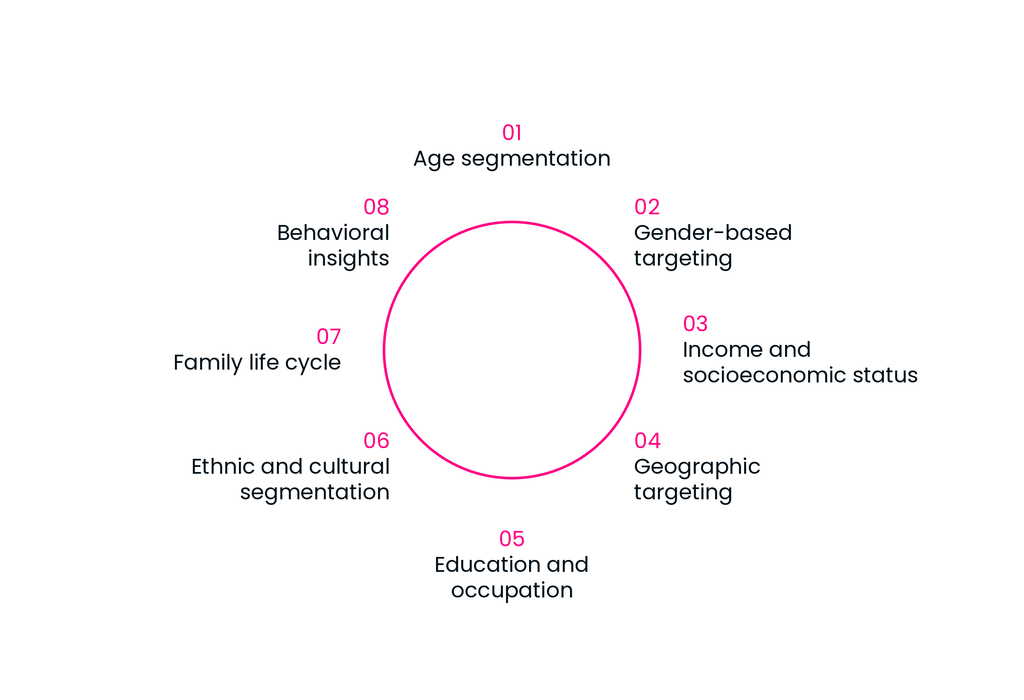
Demographic targeting is a marketing and advertising strategy focusing on reaching specific groups of people based on key characteristics such as age, gender, income, education, occupation, and ethnicity. By understanding and leveraging these attributes, advertisers can create more relevant and impactful campaigns that resonate with the intended audience.
Marketers use demographic targeting by segmenting a market into groups with shared characteristics. By doing this, they can tailor their messaging to each segment’s unique needs and preferences. Brands can then optimize their advertising budget by ensuring ads are shown only to individuals more likely to be interested in the product or service.
One of the most common applications of demographic targeting is in the retail industry, where companies might target younger consumers with trendy apparel ads, while older consumers might receive ads for anti-aging skincare.
Demographic targeting is also crucial in digital advertising. It allows advertisers to specify demographic criteria, ensuring their ads reach users who fit the desired profile.
The effectiveness of demographic targeting is evident in its widespread use and the data-driven results it delivers. This type of targeting has been shown to attract more attention and increase dwell time among viewers.
Psychographic (Interest) Targeting
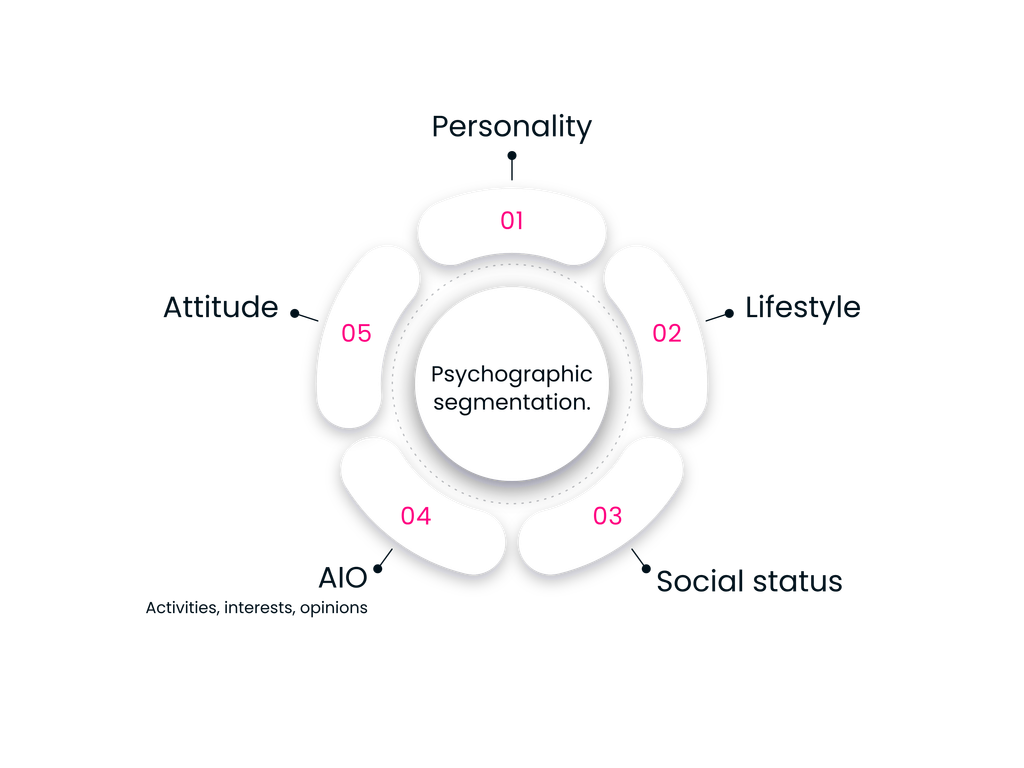
Also known as interest targeting, psychographic targeting is a marketing strategy that focuses on consumers' psychological characteristics and interests. Unlike demographic targeting, which categorizes people based on observable traits on consumers' values, beliefs, interests, and lifestyles. This type of targeting helps brands connect with audiences at an emotional level.
Psychographic targeting involves segmenting the audience based on five key variables:
- Personality
Personality segmentation sorts consumers by traits such as introversion, extroversion, emotionality, and competitiveness. Since personality influences buying behavior, brands in industries such as alcohol, electronics, and fragrances often create products that appeal to the dominant traits of their target audience.
- Lifestyle
Lifestyle segmentation divides consumers based on how they allocate their time, money, and energy. For instance, fitness-oriented people, football fans, pet owners, or fantasy-book lovers.
- Attitudes
This segmentation groups consumers by mindset, which is typically shaped by factors such as upbringing, values, and culture. Attitude segmentation helps marketers tailor products and messages according to nuanced factors such as an investing vs. saving attitude.
- Activities, Interests, and Opinions (AIO)
These groups of variables categorize consumers by their habits, leisure-time activities, and hobbies. For example, people who like sewing or gardening. Targeting these categories helps brands effectively engage different audience segments.
- Social status
Apparel brands and retailers usually categorize consumers by social class. For instance, high-end brands appear to target wealthier consumers, while mainstream brands target middle-class shoppers.
Benefits of Audience Targeting
When ads resonate with the target audience’s needs and preferences, they are more likely to take the desired action, whether that means making a purchase, subscribing to a newsletter, or engaging with content.
Audience targeting offers numerous benefits that can significantly enhance the effectiveness of digital marketing campaigns. One of the primary advantages is that it optimizes ad spend by ensuring that marketing budgets are allocated efficiently. By targeting specific segments, marketers can focus their resources on reaching the most relevant audiences, minimizing wasteful spending on uninterested users.
This precision targeting also improves conversion rates by delivering personalized messages to the right consumers at the right time. When ads resonate with the target audience’s needs and preferences, they are more likely to take the desired action, whether that means making a purchase, subscribing to a newsletter, or engaging with content.
As conversion rates increase, so does the return on investment (ROI). Brands can achieve better outcomes from their ad campaigns by maximizing the impact of every dollar spent by reaching those most likely to convert.
Audience targeting also enables brands to connect directly with specific audiences, fostering deeper relationships with customers. These tailored messages enhance brand awareness and recognition.
This targeted approach helps in developing customer loyalty. When customers feel understood and valued, they are more likely to return and become repeat buyers, leading to long-term brand loyalty.
How Outmax Powers Smarter Audience Targeting at Perion
Every targeting strategy is only as effective as the execution behind it. That's where Outmax, Perion's AI execution agent, comes in. Rather than relying on static optimization, Outmax continuously analyzes campaign performance and makes real-time decisions to allocate spend, manage pacing, and optimize delivery across YouTube, Meta, TikTok, CTV, display, video, and more. By applying a custom, brand-specific AI algorithm to every campaign, Outmax helps advertisers maximize the value of their audience targeting and media investment, tailored to their unique goals and KPIs.
For example, Webroot reduced CPA by 89%, from $4.61 to $0.53 in just 45 days using Outmax on curated CTV inventory.
Discover how Outmax can help you get more from every targeting strategy.
FAQs
What are the audience targeting methods?
Audience targeting methods include demographic targeting (age, gender, income), geographic targeting (location-specific), psychographic targeting (interests, values, lifestyle), and behavioral targeting (past behaviors, online activity). These methods allow advertisers to deliver relevant messages to specific groups, increasing the effectiveness of campaigns.
What are the different types of audience segments?
Audience segments can be categorized into demographic (e.g., millennials, seniors), psychographic (e.g., health-conscious consumers), geographic (e.g., urban dwellers), and behavioral (e.g., frequent buyers, brand loyalists). These segments help tailor content to the needs and preferences of different audiences.
What are the benefits of target audience analysis?
Target audience analysis helps businesses understand their customers' needs, preferences, and behaviors, leading to more personalized and relevant marketing efforts. Benefits include improved customer engagement, higher conversion rates, more efficient use of marketing resources, and better ROI. By knowing your audience, you can craft messages that resonate and drive action.
Why is it important to target your audience?
Targeting your audience is essential because it ensures that your marketing messages reach the people most likely to be interested in your products or services. This not only increases conversion rates but also improves customer satisfaction by delivering relevant content. Effective audience targeting reduces wasted ad spend, enhances campaign performance, and fosters long-term customer loyalty.


