


What is Customer Lifetime Value: Explanation and Calculations
Throughout the customer lifecycle, some customers generate more revenue than others. Customer Lifetime Value (CLV) is the total revenue a business can expect from a single customer throughout their entire relationship with the brand. Measuring CLV helps companies understand customer impact, optimize marketing strategies, improve retention, and drive long-term profitability.
This glossary page explores CLV, its importance, and ways to increase it.
Customer Lifetime Value Models
The two main approaches are Historical CLV and Predictive CLV, each offering unique insights for marketing and financial planning.
Customer Lifetime Value (CLV) models help businesses estimate the total revenue a customer will generate over time. The two main approaches are Historical CLV and Predictive CLV, each offering unique insights for marketing and financial planning.
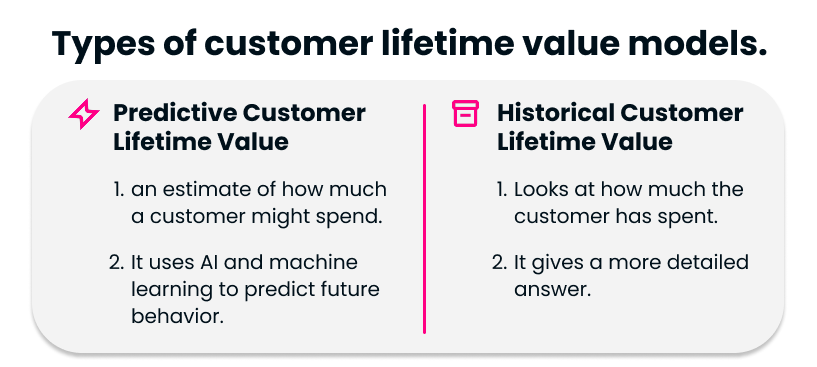
Historical CLV calculates a customer’s past purchases to determine their total value up to the present, providing a reliable snapshot of past customer value. This method works well for businesses with stable customer behavior and consistent purchase partners. However, it is less useful for forecasting long-term profitability.
Predictive CLV, on the other hand, uses machine learning, statistical models, and customer behavior patterns to estimate future spending. This approach considers factors like purchase frequency, average order value, and customer retention rates to predict long-term revenue. Predictive CLV is especially valuable for businesses with evolving customer behaviors, subscription models, or frequent repeat purchases.
Combining both models offers companies an understanding of customer value while identifying high-value customers and anticipating future trends.
How to Calculate the Customer Lifetime Value
Different formulas and methods can be used depending on the industry and customer behavior. Basic CLV formula:
(Average Purchase Value x Purchase Frequency x Customer Lifespan)
How to Calculate the Average Purchase Value?
The average purchase value measures the average amount a customer spends per transaction. To calculate it, divide the total revenue generated over a given period by the total number of purchases made during that period.
Formula:

How to Calculate Purchase Frequency?
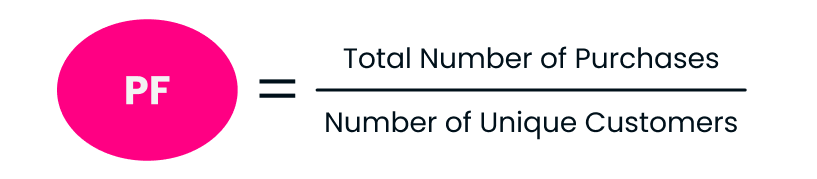
Purchase frequency indicates how often customers make purchases within a given time frame. It is calculated by dividing the total number of purchases by the number of unique customers. A higher PF suggests strong customer retention.
Formula:
How to Calculate the Customer Lifespan?
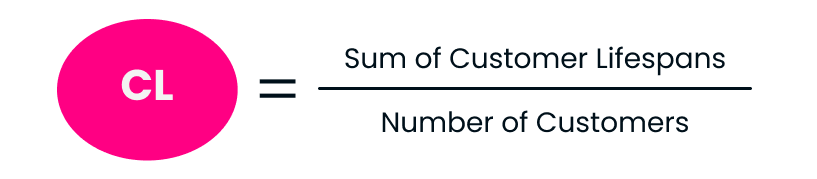
Customer lifespan estimates how long a typical customer continues buying from a business. It is determined by averaging the total time each customer remains active before churning.
Formula:
You can enhance Customer Lifetime Value (CLV) calculations by factoring in discount and churn rates. This will give you a more accurate long-term projection. Since revenue is earned over time, applying a discount rate accounts for the decreasing present value of future earnings. This is particularly useful for businesses with long customer relationships.
Customer Lifespan estimates how long a typical customer continues buying from a business
Churn rate, the percentage of customers who stop purchasing within a period, helps estimate revenue loss and predict customer retention trends.
A more advanced CLV formula incorporating these elements could be:
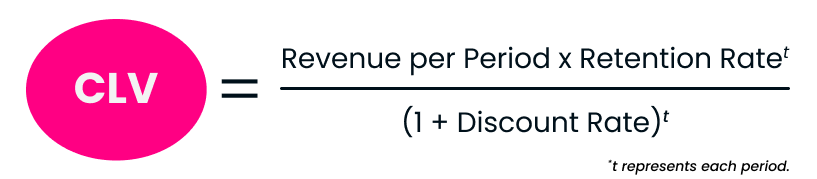
* Where t represents each period.
The more advanced formula provides a more realistic measure of customer value, especially for subscription-based or recurring revenue models.
Examples of CLV Calculations
Let’s consider a couple of examples:
1.Suppose an e-commerce customer spends an average of $50 per purchase, buys five times a year, and stays loyal for three years. The CLV would be:
CLV = 50 x 5 x 3 =750
If the company applies a discount rate of 5% and an annual churn rate of 20%, the adjusted CLV would be lower due to customer attrition and revenue depreciation.
2. A streaming platform charges $10 per month, and the average customer stays for 24 months. The basic CLV calculation is:
CLV = 10 x 24= 240
Factors that Can Impact CLV
There are a number of factors that can impact the CLV rate:
- Customer Acquisition Costs (CAC): A high CAC can reduce net CLV if the cost of acquiring a customer outweighs the long-term revenue potential.
- Retention rate: A higher retention rate extends CLV, making royalty programs and personalized engagement essential.
- Purchase frequency: Businesses with recurring purchases tend to have a higher CLV than one-time purchase models.
- Average Order Value (AOV): Upselling and cross-selling can increase AOV, boosting overall CLV.
- Customer satisfaction and experience: High satisfaction leads to longer relationships and greater lifetime value. Negative experiences, on the other hand, contribute to early churn.
- Market trends and economic conditions: External factors like economic downturns or changing consumer preferences can influence long-term customers’ spending behavior.
Strategies to Increase Customer Lifetime Value
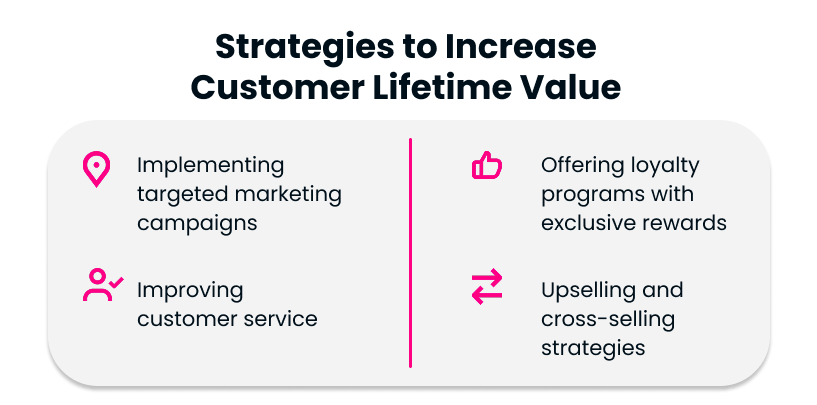
Boosting CLV requires a combination of marketing, personalization, and customer experience enhancement. There are several strategies businesses can use to improve their CLV:
- Implementing targeted marketing campaigns that use customer data to deliver relevant content and promotions. Personalized interactions increase engagement and strengthen brand loyalty.
- Improving customer service by providing responsive support, seamless issue resolution, and proactive communication, keeping customers satisfied and returning.
- Loyalty programs with exclusive rewards encourage repeat purchases and long-term commitment.
- Upselling and cross-selling strategies increase the average order value by recommending complementary or higher-tier products and maximizing revenue from existing customers.
The Role of Retention in Maximizing CLV
Retaining existing customers is significantly more cost-effective than acquiring new ones and directly impacts CLV by fostering long-term engagement. Effective retention strategies include personalized follow-ups, targeted re-engagement campaigns, and consistent value delivery. A seamless customer experience across digital and offline touchpoints ensures frictionless interactions, reducing churn.
Leveraging Data and AI to Improve CLV
Modern businesses use data analytics and AI-driven insights to enhance CLV strategies and predict customer behavior. AI technologies analyze browsing and purchase history to suggest relevant products, increasing conversions. Predictive analysis segments customers based on behavior, allowing for precise targeting and retention strategies.
Real-time data tracking helps measure CLV improvements, enabling businesses to refine campaigns, optimize pricing, and identify at-risk customers before they churn. Predictive analytics helps anticipate customer behavior and optimize marketing efforts.
Why is Customer Lifetime Value Important for Businesses?
CLV helps businesses understand the long-term revenue potential of each customer. A high CLV indicates strong customer retention, higher profitability, and sustainable growth. A business that applies strategies to increase CLV may benefit from lower acquisition costs and better retention rates.
Brands should consider CLV when designing marketing strategies and allocate budgets toward high-value customers. Finally, CLV insights can help optimize pricing, develop loyalty programs, and enhance customer experiences.
