


Inferred Brand Intent (IBI): How Marketers Predict Purchase Interest
While a consumer may tell a survey that they value sustainability and minimalism, their digital footprint might reveal they love flash fashion, flash sales and luxury upgrades. This gap between stated preference and actual behavior is where Inferred Brand Intent (IBI) comes to help. IBI helps advertisers uncover purchase interest by analyzing real-world signals across devices, channels, and moments. Keep reading to learn how this insight powers modern, performance-driven advertising.
What Is Inferred Brand Intent (IBI)?
IBI is a sophisticated predictive methodology used by advertisers to gauge a consumer’s likelihood of purchasing a specific product or engaging with a brand based on their behavioral patterns rather than direct, verbalized statements.
Unlike declared intent, where a user might explicitly type “buy mountain bike” into a search engine, IBI looks at the subler, non-linear signals. It analyzes the specific articles a person reads over a month, the videos they linger on for more than thirty seconds, the types of apps they frequently open, and their physical movement patterns in the real world. When these disparate, fragmented data points are woven together by machine learning, they form a high-definition picture of interest that the user hasn’t yet put into words.
Think of it as the difference between a stranger walking into a cafe and announcing they are hungry versus a seasoned waiter noticing a patron staring longingly at a dessert tray while repeatedly checking their watch and scrolling through food reviews on their phone. The waiter doesn’t need to be told: the intent is inferred through a series of contextual clues. In the digital ecosystem, this allows marketers to move beyond broad-brush targeting and into a realm of surgical precision. It identifies high-value prospects who are already leaning toward a purchase, even if they are currently browsing a completely unrelated website.
Why Is Inferred Brand Intent Important for Digital Advertising?
The rollout of privacy regulations like GDPR and CCPA, coupled with the steady erosion of traditional tracking methods such as third-party cookies, made the old ways of blunt-force retargeting ineffective. Inferred brand intent provides a more sophisticated, less intrusive, and more respectful path forward. It focuses on the context and action of the moment, making advertising feel less like a surveillance tactic and more like a helpful, timely suggestion.
IBI also solves the problem of the “silent majority”. Statistics show that only a tiny fraction of potential customers are actively searching for a specific product at any given moment. If a brand only targets declared intent through search engine marketing, it is fighting an expensive, saturated battle over a very small slice of the consumer pie. Marketers can tap into the large pool of passive shoppers who show behavioral signs of interest but haven’t yet taken action. Engaging this early on the customer journey allows brands to build authority and recall before competitors.
How Accurate is Inferred Brand Intent? Data Signals Used to Infer Brand Intent
Accuracy in IBI is directly determined by data density and the sophistication of the algorithms that process it. While it may never reach the 100% binary certainty of a “Buy Now” click, modern AI -driven models can identify the propensity to buy with remarkable ease.
As more behavioral layers are added to the profile, the accuracy of the inferences increases. For instance, a single visit to a car review website might be an outlier, but when that visit is combined with a search for “auto loan calculators” and a physical GPS signal at a local dealership. The system generates a high-confidence signal of intent.
The industry validates this accuracy through “conversion lift” studies. A primary example of IBI in action is Perion’s Ambetter Case Study. Ambetter, a leading healthcare brand, needed to drive enrollment during the highly competitive open enrollment season. Because healthcare is strictly regulated, they required a privacy-compliant way to target high-intent users without relying on third-party tracking or personal health data. Perion’s SORT™ technology outperformed traditional cookie-based methods.
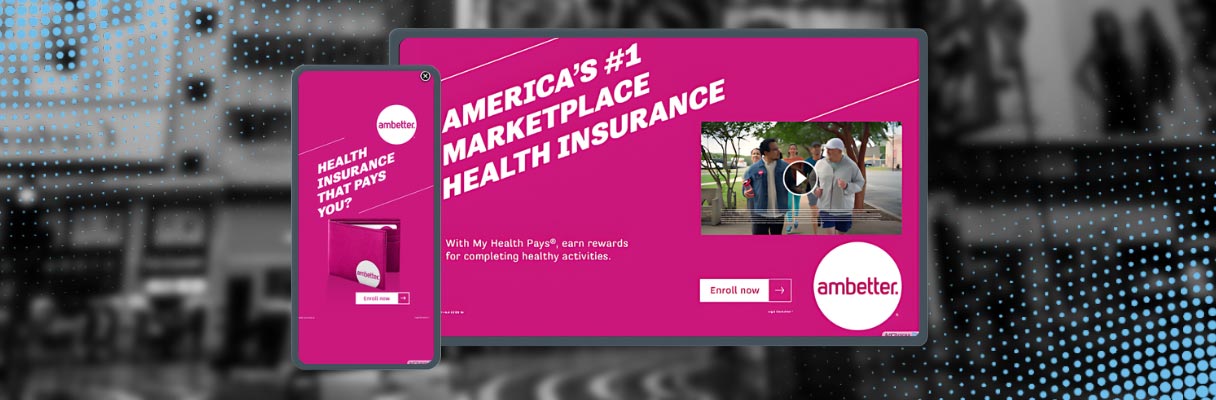
Image source: Perion
Consistently, IBI-driven campaigns outperform other methods because they effectively filter out the tourists and focus precious ad spend on drawing genuine psychological momentum toward a purchase.
When Is Inferred Brand Intent Used?
IBI is most effective during what Google famously termed “the messy middle” of the consumer journey. This often-confusing period between the initial trigger and the actual purchase. During this phase, consumers constantly explore and evaluate their options. IBI is particularly powerful for high-consideration purchases, such as automobiles,, enterprise-level software, home mortgages, or luxury travel. In these categories, the decision- making is a marathon of research and comparison.
Advertisers use these inferred insights to trigger mid-funnel campaigns that provide value rather than a sales pitch. For example, for a user researching the benefits of electric vehicles, a savvy brand will serve a high-quality video highlighting battery longevity or comparing costs to gasoline.
Inferred Brand Intent vs. Declared Intent
The distinction between these two concepts is the cornerstone of a modern, multi-layered marketing strategy. Declared intent is explicit, vocal, and unmistakable. It is the user saying, “I want this specific thing right now.”While highly valuable, declared intent is the final step of a journey.
Inferred intent is the quiet and more nuanced precursor. It captures the user while they are still malleable. While declared intent tells you what they want, inferred intent tells you why they want it.
First-Party vs. Third-Party Data in IBI
Effective IBI models rely on both third and first-party data, with the latter being the undisputed gold standard of the industry. It is the information a brand collects directly through its own ecosystem. It may include website interactions, email engagement, and loyalty program data.
However, first-party data has a limitation: scale. It only tells you what people are doing when they are interacting with you. This is where third-party data, sourced from verified outside providers, comes into play. It provides a panoramic look at what the consumer is doing when they are not on your website.
Most IBI strategies will use first-party data as a seed to identify the common behaviors of your best customers, and then project the model onto third-party data sets to find thousands of new potential customers.
Inferred Brand Intent vs. Contextual Targeting
It is a common mistake to conflate IBI with contextual targeting, but these are very different tools. Contextual targeting is entirely about the environment that surrounds the user’s online behavior. For example, showing a running shoe ad on a marathon training blog, or a kitchen appliance ad on a recipe website.
Inferred brand intent, by contrast, is entirely about the individual. It allows a brand to show a running shoe ad to a user because that user visited a marathon blog yesterday, checked the local weather for a race tomorrow, and downloaded a new pedometer app. IBI follows the user’s accumulated intent across the entire web, whereas contextual targeting stays anchored to a single piece of content.
