


Fold in Advertising: Definition and Why it Matters
When it comes to ad placement, in advertising, as in real estate, the location is everything. In digital advertising, the web pages are divided according to the part that is first shown to the user. The divider is called the fold, and it is the topic of this glossary page. Read on to learn more.
What is Fold in Advertising?
Imagine you’re loading a web page. There is a part that loads in front of you right away, and another part you need to scroll down to see. The imaginary line that divides these two parts is called “the fold”.
This term comes from the printed news industry. Physical newspapers were folded in half lengthwise, and the important stories were printed on the top part of the page. Similarly, a webpage is divided imaginarily in half, where the top part is immediately visible after loading, and the lower part is visible only after scrolling down.
Why is the Fold Important?
This imaginary line divides prime from not-so-visible ad placements. Just like in printed newspapers, the upper part of the page is where the most important ad placements are located. The reason is logical: ads placed above this line get seen more often than ads placed below this line.
Ads placed below the line require the user to take an action, to scroll down the page to see them. Therefore, these ads are viewed less often, and these placements are less valuable.
Above the Fold vs Below the Fold
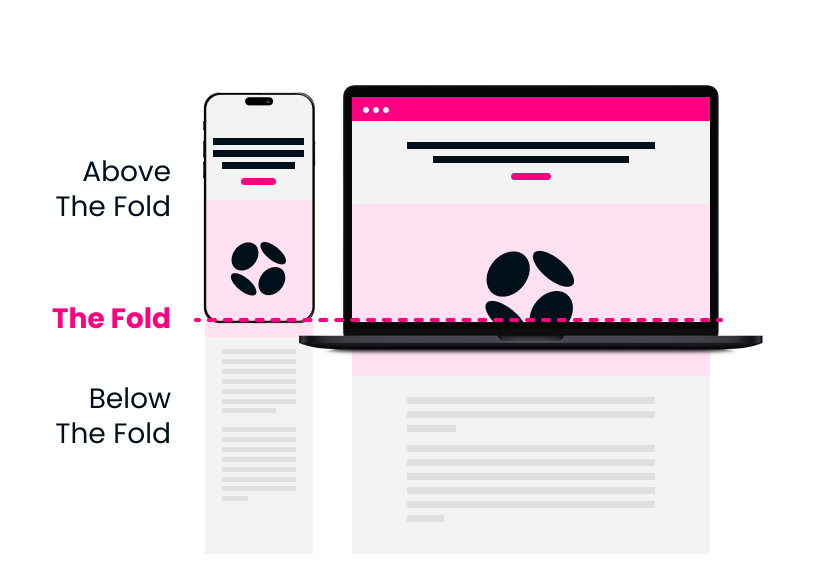
The term “above the fold” refers to the portion of the webpage you can see when it loads, without the need to scroll down. “Below the fold” refers to the part of the webpage hidden from sight, which is only visible when scrolling down.
The location of the fold varies according to the device, and it is different for desktops, laptops, tablets, and mobiles, as all have different screen sizes and resolutions.
When is the Fold Used?
The fold is used as a guideline to place content and ads in marketing and advertising. Content and ads are placed above the fold to showcase the most important information or calls-to-action to the user. In web design, the fold is used to separate the premium area for content and advertisement placement from the rest of the page. In advertising, ad slots above the fold get higher bids as they’re considered to be more effective.
Benefits of Using the Fold to Select Ad Placements
Using the fold as a criterion for selecting ad placements in programmatic advertising can increase the visibility and effectiveness of your ads. To choose which placement is more effective, A/B testing can help you decide what works best for your campaign. For example, ads placed above the fold have several benefits:
Ads above the fold have a natural visibility advantage. Their position ensures the ad is noticed by almost every visitor, unlike ads lower on the page that risk being overlooked.
This prime visibility often translates into higher engagement. Since users are immediately exposed to the message, ads above the fold typically see higher click-through rates. Being among the first elements a user encounters can make the difference between an ad that sparks action and one that goes unseen.
Another benefit is stronger ad recall. When an ad is positioned in a prominent spot, it becomes more memorable even if the user doesn’t click right away. That initial exposure helps build familiarity and recognition, which can influence future interactions and purchasing decisions.
Is there a reason to place ads below the fold?
Below the fold placements may not grab immediate attention, but they serve a valuable role in specific campaign strategies. Users who scroll down a page are typically more engaged, taking the time to explore content in depth. This makes ads below the fold effective for promoting products or services that benefit from additional context, such as detailed descriptions, comparisons, or supporting information. These placements can also feel less intrusive, aligning better with the user’s browsing flow. Brands that seek quality interactions rather than quick impressions, below-the-fold ads can deliver meaningful engagement and more informed clicks.
