


Your Digital Out-of-Home (DOOH) plan and your social budget are probably not talking to each other. Most advertisers still run them as two campaigns, sometimes three, once Connected TV (CTV) is in the mix, each with its own brief, its own timeline, and its own dashboard.
One team plans the DOOH buy. Another activates social. A third pulls CTV numbers into a separate report. By the time anyone tries to line the three up, the moment the campaign was built around has usually passed.
And the media landscape is only becoming more connected. Retail Media, DOOH, CTV, social, and other digital channels are increasingly drawing on the same audiences, data, and campaign goals. The more channels advertisers add, the harder it becomes to manage them effectively in isolation.
Retail Media is one of the clearest examples of that shift. As media, commerce, data, and technology become more connected, Retail Media is growing fastest where DOOH and a widening range of newer digital assets are powering it, rather than standing apart from it.
That gap is no longer a technology problem. The tools to close it already exist. It is a workflow problem, and it is the one advertisers are most ready to fix.
Why the timeline changed
DOOH used to be planned weeks in advance and left alone once it launched. That is no longer how buyers expect to work. DOOH has become a programmatic channel, and buyers increasingly want to plan, adjust, and measure it on the same timeline as social and web, not on a separate track that only syncs up in a post-campaign report.
That shift raises the bar for the tools built around it. A modern planner needs to move from brief to plan in minutes, not days, with the same control and transparency buyers already expect from social and search.
We saw this expectation everywhere, in conversation after conversation, at DMEXCO 2026: agency buyers, DOOH partners, and brand marketers all described the same thing in their own words. Less time reconciling separate systems. More time on the decisions that actually move performance.
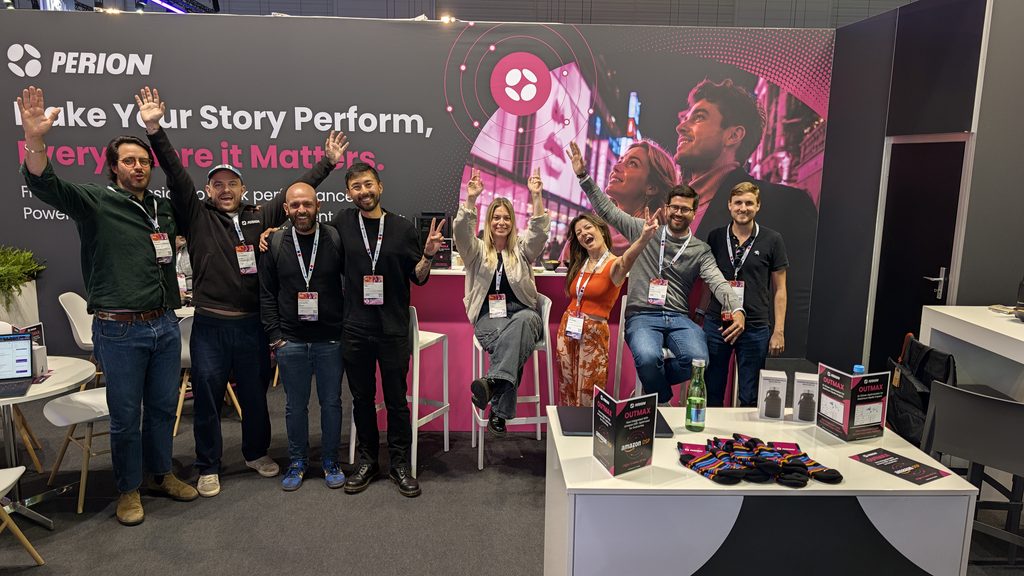
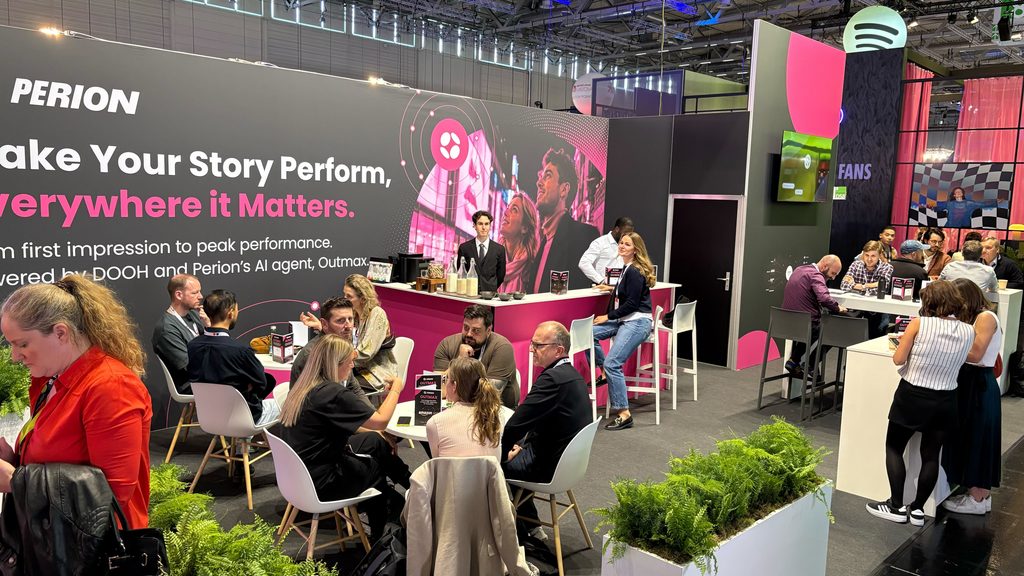
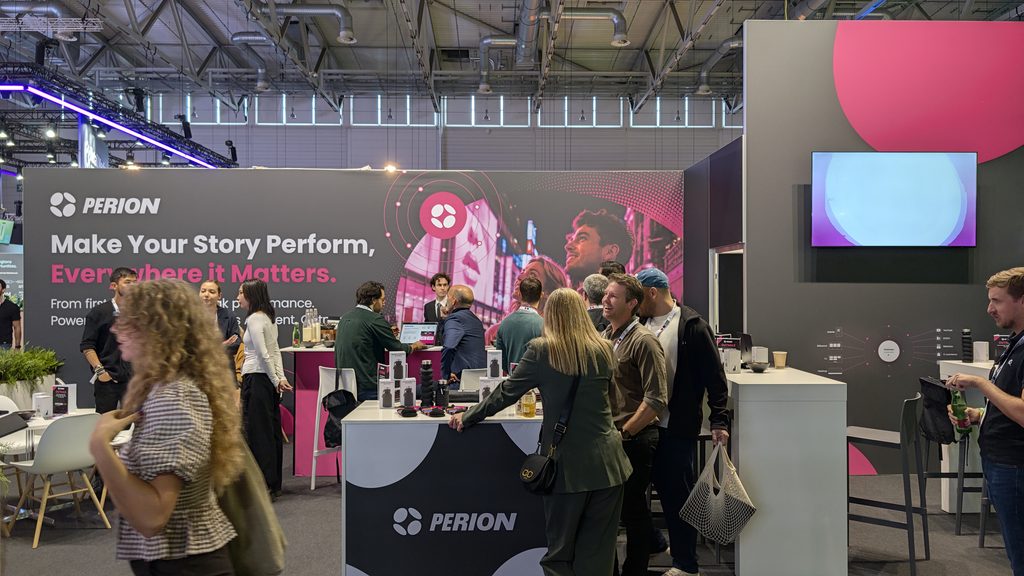
Perion exhibited with its own stand for the first time at DMEXCO 2026, in Hall 8.1, Stand D058, built around that same idea: DOOH and social should be planned as one connected journey, not two. We were glad to reconnect with partners we have worked with for some time, and to start new conversations with many more across the two days in Cologne.
Plan: from brief to guaranteed DOOH plan in minutes
Ask Perion DOOH Planner is a self-serve tool that turns a brief into an activated plan in minutes, compared to roughly 7 days for a fully managed brief-to-live process. It draws on more than 590 media owners and 1.6 million screens, with inventory guaranteed inside enterprise demand-side platforms (eDSPs) and every placement auditable through DSP logs.
For teams used to a week-long, manually managed DOOH buy, a five-minute self-serve launch changes what is possible inside a single campaign window. Speed and certainty stop being a tradeoff.
Activate: one AI agent optimizing across every channel
The same logic extends past the screen. Outmax, Perion’s AI agent for cross-channel bidding and optimization, works across DV360, YouTube, Meta, The Trade Desk (TTD), TikTok, and Google Ads, applying one consistent optimization logic across budgets that have traditionally been managed platform-by-platform.
AI is now widely used across advertising, but adoption alone doesn’t guarantee better campaign results. The real value comes from applying intelligence across channels to optimize toward the outcome that matters. Outmax brings that approach together in one AI layer, connecting channels around each campaign’s KPI rather than treating every platform as a separate optimization task.
Instead of each channel optimizing in isolation, Outmax optimizes toward the outcome the buyer actually set out to achieve, whether that is reach that supports a DOOH campaign, performance that shapes the next budget decision, or both viewed together. Independent by design. Outcome-driven by default.
A simple way to see the difference: run half a budget through an existing setup and half through Outmax, then compare the delta after 30 days. It is a low-commitment way for a buyer to see the impact in their own numbers, not just take a faith claim.
See what Outmax can deliver with your own data. Run a 30-day test and compare the results. Contact us.
Analyze: bringing the screen and the feed into one view
Planning and activation can both work well and still leave a gap at measurement, when a DOOH screen, a YouTube view, and a TikTok impression are each reported separately.
Cross-channel measurement closes that gap, giving advertisers a single view of performance rather than a set of disconnected platform reports. A brief goes into Ask Perion DOOH Planner and comes out as a guaranteed, auditable DOOH plan. Outmax carries the same outcome logic into YouTube, TikTok, Meta, and the open web. Measurement then treats it all as one campaign, not three.
What changes, and what doesn’t
None of this replaces the judgment of a media planner. It gives planners back the time that used to go into manual work between DOOH and social, so that time goes into strategy instead.
Planning gets faster because it starts from one brief. Activation becomes simpler because inventory and bidding logic work together rather than separately. Measurement becomes more useful because performance is visible across channels from the start, rather than stitched together after the fact.
The result is no less control. It is more visibility, more flexibility, and more time for the decisions that actually matter.
This is also where the next phase of AdTech is taking shape. As the ecosystem grows more complex, progress will depend less on adding more infrastructure and more on making smarter decisions across the systems advertisers already use. The ability to act on connected data quickly, and optimize toward shared outcomes, will become increasingly important.
The market is ready for this
The volume and consistency of what we heard at DMEXCO 2026 confirmed something we already believed: advertisers and agencies are done treating DOOH, CTV, and social as separate disciplines with separate tools. They are looking for a single, accountable view across the full media journey, and they are ready to test it against their own numbers to see the difference for themselves.
The shift toward connected, AI-powered media planning is already underway. The opportunity now is to make it easy for more advertisers to put it into practice.
Make your story perform, everywhere it matters.
Want to explore what a connected plan could mean for your campaigns? Reach out to the Perion team.


