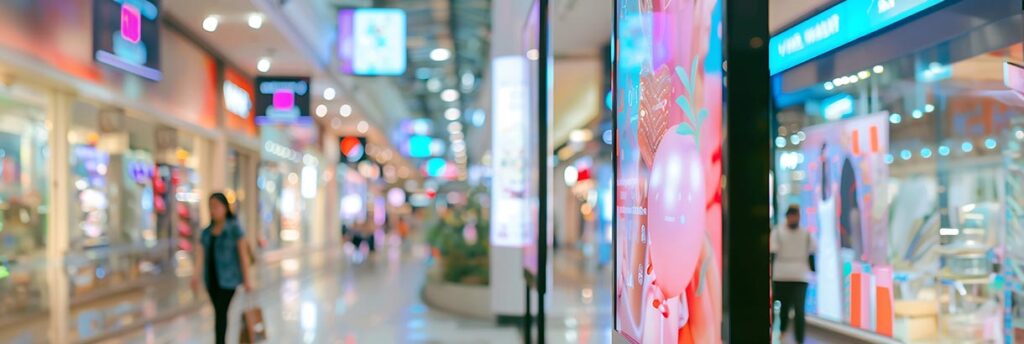


Static out-of-home ads that display the same message to every audience, at every hour, waste budget and attention. DOOH dynamic creative optimization solves this by adapting visuals and messaging to real-world conditions in real time. This article explores how dynamic creatives work, their benefits, proven use cases, and how to build a smarter optimization strategy.
Key Takeaways
Q: What does DOOH dynamic creative optimization actually do?
A: It automatically assembles and delivers ad creatives on digital screens based on live contextual signals—such as weather, time, and location—ensuring each impression is relevant rather than generic.
Q: How many creative variations can a single dynamic creative campaign produce?
A: By using modular templates with interchangeable components, a single DCO-enabled campaign can generate dozens to hundreds of permutations without separate media buys for each version.
Q: Which data triggers are most effective for powering dynamic DOOH ads?
A: High-impact triggers include weather conditions, time of day, proximity to points of interest, and live event data—though advertisers should start with one or two triggers before adding complexity.
Q: Why is dynamic creative in programmatic DOOH essential for automated buying?
A: Programmatic buying controls where and when an ad appears, while DCO controls what it says at the moment of delivery—together they ensure both placement and messaging are optimized per impression.
Q: How does Perion support real-time creative optimization for out-of-home campaigns?
A: Perion integrates creative decisioning directly into programmatic DOOH transactions, connecting brands with premium inventory and enabling audience targeting paired with dynamic creative assembly at scale.
Q: What is the biggest pitfall when launching a DCO strategy for digital out-of-home?
A: Over-complicating trigger logic by layering too many data signals at once—this makes campaigns harder to manage and measure, so starting simple and iterating based on performance data is critical.
Q: How will AI shape the future of DOOH dynamic creative optimization?
A: Machine learning models are replacing manual rule-based logic by analyzing historical performance data to predict the strongest creative combination for each context, reducing setup effort and improving results.
What Is Dynamic Creative Optimization for DOOH?
Dynamic creative optimization (DCO) for digital out-of-home (DOOH) is the automated process of assembling and delivering ad creatives on digital screens based on live contextual signals. Rather than running a single static asset across every location and time slot, DCO pulls from a library of pre-approved creative components and combines them according to predefined rules and data triggers.
Breaking Down the Core Concept
At its simplest, DOOH dynamic creative optimization connects three layers: a creative management platform that houses modular assets, a data layer that feeds real-time signals (weather, time of day, audience demographics), and a decisioning engine that selects the right combination. The result is an ad that feels tailor-made for the moment it appears.
How DCO Differs from Standard A/B Testing
While A/B testing compares two fixed variants, DCO operates across dozens or even hundreds of permutations simultaneously. The system does not simply rotate creatives; it actively selects the most relevant version for each impression based on contextual inputs. This distinction is critical for advertisers who want granular control over messaging without manually trafficking hundreds of assets.
Why the Distinction Matters for Advertisers
- Efficiency: One campaign can serve countless creative variations without separate media buys for each.
- Relevance: Messaging aligns with the viewer’s environment, increasing recall and engagement.
- Speed: Creative updates happen automatically, eliminating the lag of manual asset swaps.
Platforms like Perion have invested heavily in connecting programmatic DOOH inventory with dynamic creative capabilities, enabling advertisers to activate DCO at scale across premium screen networks.
Understanding How Dynamic Creatives Work on Digital Screens
Knowing how dynamic creatives work requires understanding the technical chain from asset creation to screen delivery. The process is more nuanced than simply swapping an image; it involves real-time data ingestion, rule-based decisioning, and sub-second rendering.
Step 1: Modular Creative Design
Designers build a master template with interchangeable modules. A single template might include slots for a headline, a product image, a background color, a call-to-action, and a pricing field. Each slot has multiple variants stored in a creative management platform (CMP). The number of possible combinations grows exponentially with each additional module.
Step 2: Rule and Trigger Configuration
Campaign managers define the logic that governs which variant appears. Rules might specify:
- Show the iced coffee creative when the temperature exceeds 28°C.
- Switch to the hot chocolate creative when it drops below 10°C.
- Display a lunch menu between 11:00 and 14:00.
- Feature the nearest store location based on the screen’s geolocation.
Step 3: Real-Time Rendering and Delivery
When an impression opportunity arises, the decisioning engine evaluates live data feeds, selects the appropriate modules, assembles the final creative, and pushes it to the screen. This entire cycle typically completes in under one second. The rendered creative is cached locally on the screen player to ensure smooth playback even if connectivity fluctuates.
The Role of APIs and Data Feeds
APIs serve as the connective tissue between external data sources and the creative engine. Weather APIs, traffic APIs, sports score feeds, pollen count databases, and social sentiment trackers can all be wired into the decisioning logic. The richer the data layer, the more precise the creative adaptation becomes.
The Core Benefits of Using Dynamic Creatives in OOH
The benefits of using dynamic creatives extend well beyond novelty. When implemented correctly, DCO transforms DOOH from a broad-reach branding channel into a precision performance tool.
Higher Engagement and Recall
Research from Ocean Outdoor and Posterscope has shown that contextually relevant DOOH ads can generate significantly higher levels of consumer engagement compared to static equivalents. When a message mirrors what a viewer is experiencing – hot weather, rush hour traffic, a nearby event – it registers as useful information rather than advertising noise.
Improved Media Efficiency
Instead of booking separate campaigns for different dayparts, locations, or audience segments, a single DCO-enabled campaign handles all variations. This consolidation reduces trafficking overhead, simplifies reporting, and cuts wasted impressions on irrelevant messaging.
Faster Time to Market
Launching a new product variant or responding to a competitor’s promotion no longer requires a full creative production cycle. Marketers update a data feed or swap a module in the CMP, and the change propagates across the entire screen network within minutes.
Summary of Key Benefits
| Benefit | Impact |
| Contextual relevance | Higher ad recall and brand favorability |
| Operational efficiency | Fewer assets to traffic, fewer campaigns to manage |
| Real-time responsiveness | Messaging adapts to conditions without manual intervention |
| Creative scalability | Hundreds of permutations from a single template |
| Budget optimization | Spend is concentrated on the most relevant message at each moment |
Inspiring Use Cases of Dynamic Creative in Recent Campaigns
Theory is useful, but real-world use cases of dynamic creative demonstrate the tangible impact of this approach. Below are several categories of campaigns that have delivered measurable results.
Weather-Triggered QSR Campaigns
Quick-service restaurant brands have been among the earliest and most enthusiastic adopters. A well-documented example involves McDonald’s UK, which ran dynamic DOOH ads that promoted different menu items based on local temperature and weather conditions. Ice cream sundaes appeared during heat waves; warm wraps surfaced during cold snaps. The campaign reported significant uplifts in footfall to nearby locations.
Retail Countdown and Inventory-Based Ads
Fashion and electronics retailers have used live inventory feeds to show products that are actually in stock at the nearest store. Countdown timers for flash sales create urgency, while dynamic pricing modules reflect real-time promotional offers. This approach bridges the gap between digital precision and physical retail.
Sports and Entertainment Triggers
Betting and beverage brands have activated creatives based on live sports scores. When a local team scores, the billboard near the stadium instantly updates with a celebratory message and a branded call-to-action. This kind of moment marketing would be impossible with static OOH.
Automotive and Travel Campaigns
- Automotive: Car manufacturers have displayed different vehicle models based on traffic conditions – SUVs during weekend getaway hours, city cars during weekday commutes.
- Travel: Airlines and tourism boards have shown destination imagery and pricing that updates based on flight availability and local weather at the departure city, making a sunny beach vacation more appealing during a rainy afternoon.
Perion has facilitated several of these campaign types through its programmatic DOOH capabilities, helping brands connect creative decisioning with premium inventory across major screen networks.
Key Data Triggers That Power Dynamic DOOH Ads
The intelligence behind dynamic DOOH comes from the data triggers feeding the creative engine. Understanding which triggers are available – and which ones matter most for your objectives – is essential for building effective campaigns.
Environmental Triggers
- Weather: Temperature, precipitation, UV index, humidity, wind speed.
- Air quality and pollen count: Particularly valuable for pharmaceutical and wellness brands.
- Daylight conditions: Adjusting creative brightness, color palette, or messaging tone between dawn, midday, dusk, and night.
Temporal Triggers
- Time of day: Breakfast, lunch, afternoon, evening, and late-night dayparts.
- Day of week: Weekday commuter messaging versus weekend leisure messaging.
- Countdown timers: Days or hours until an event, product launch, or sale deadline.
Audience and Location Triggers
- Foot traffic density: Adjusting messaging based on crowd volume near the screen.
- Proximity to points of interest: Nearest store, venue, or activation site.
- Anonymized mobile audience data: Aggregated demographic and behavioral signals from mobile SDKs that indicate the composition of the audience near a screen at a given time.
External Event Triggers
Live sports scores, stock market movements, social media trending topics, flight delays at airports, and public transit disruptions can all serve as creative triggers. The key is selecting triggers that create a meaningful connection between the data signal and the brand message rather than using novelty for its own sake.
The Crucial Role of Dynamic Creative in Programmatic DOOH
Programmatic buying and dynamic creative are natural partners. When combined, they allow advertisers to control not only where and when an ad appears but also what it says at the moment of delivery. Understanding dynamic creative in programmatic DOOH is essential for any brand investing in automated out-of-home buying.
How Programmatic Amplifies DCO
In a programmatic workflow, impressions are bought through demand-side platforms (DSPs) that evaluate bid requests in real time. When DCO is layered on top, the creative attached to each winning bid is assembled dynamically based on the contextual signals associated with that specific impression. This means two screens in the same city can display different creatives from the same campaign at the same moment.
Supply-Side Integration
For dynamic creative in programmatic DOOH to function smoothly, supply-side platforms (SSPs) and screen networks must support dynamic ad serving. This includes accepting VAST or HTML5 creative formats, providing screen-level metadata (location, screen size, orientation), and supporting real-time content updates. Major SSPs like Vistar Media, Hivestack, and Place Exchange have built these capabilities into their platforms.
Perion’s Approach to Programmatic DCO
Perion connects advertisers with high-impact DOOH inventory through programmatic channels, enabling brands to pair audience targeting with real-time creative optimization. By integrating creative decisioning into the programmatic transaction, Perion helps reduce the friction between media buying and creative execution, allowing campaigns to activate faster and perform better.
Key Considerations for Buyers
- Confirm that your DSP supports dynamic creative tags for DOOH inventory.
- Verify that the target screen network accepts the creative format your CMP outputs.
- Establish clear fallback creatives in case a data feed fails or a trigger condition is not met.
- Align your programmatic targeting parameters (geography, daypart, audience segment) with your creative rules to avoid conflicts.
Getting Started with Real-Time Creative Optimization
Implementing real-time creative optimization does not require a massive budget or a dedicated data science team. It does, however, require a structured approach. Below is a practical framework for launching your first DCO-enabled DOOH campaign.
Phase 1: Define Your Objectives and Triggers
Start by identifying the business problem you want DCO to solve. Are you trying to increase footfall during off-peak hours? Promote weather-appropriate products? Localize messaging for different markets? Your objective determines which data triggers to activate and how many creative variants you need.
Phase 2: Build Modular Creative Assets
Work with your design team or agency to create a flexible template system. Best practices include:
- Keep text concise: DOOH viewers have limited dwell time, so headlines should be five words or fewer.
- Design for distance: Ensure legibility from the typical viewing distance of each screen format.
- Maintain brand consistency: All variants should feel like part of the same campaign, even when modules change.
- Test at scale: Preview every possible combination to catch awkward layouts or clashing color pairings.
Phase 3: Connect Data Feeds and Set Rules
Integrate the relevant APIs into your CMP or ad server. Map each data condition to a specific creative variant. Build a decision tree or rule matrix that accounts for edge cases – what happens when two triggers conflict, or when a data feed goes offline?
Phase 4: Launch, Monitor, and Iterate
Go live with a controlled set of screens and triggers. Monitor delivery logs to confirm that the correct variants are rendering under the expected conditions. Use performance data (footfall lift, brand recall studies, QR code scans) to refine your rules and creative modules over subsequent flight periods.
Common Mistakes to Avoid in Your DCO Strategy
Even well-resourced teams stumble when deploying dynamic creative for the first time. Recognizing these pitfalls early can save significant budget and frustration.
Mistake 1: Over-Complicating the Trigger Logic
More triggers do not automatically mean better performance. A campaign that tries to account for weather, time, audience demographics, traffic conditions, and live sports scores simultaneously often becomes impossible to manage and difficult to measure. Start with one or two high-impact triggers and expand only after proving their value.
Mistake 2: Neglecting Fallback Creatives
Data feeds fail. APIs time out. When this happens, the screen still needs to display something. Campaigns without a well-designed default creative risk showing broken layouts, placeholder text, or error messages on premium screens. Always build and test a strong fallback asset.
Mistake 3: Ignoring Screen Context
A creative designed for a large-format roadside billboard will not perform well on a small screen in a shopping mall elevator. Screen size, orientation, resolution, viewing distance, and ambient lighting all affect how a creative is perceived. Adapt your templates to the screen environments in your media plan.
Mistake 4: Treating DCO as a Set-and-Forget Tool
Dynamic creative requires ongoing stewardship. Seasonal shifts, product changes, and evolving audience patterns mean that the rules you set at launch may become stale within weeks. Schedule regular reviews to update triggers, refresh creative modules, and incorporate learnings from performance data.
Mistake 5: Failing to Align Media and Creative Teams
DCO sits at the intersection of media planning and creative production. When these teams operate in silos, the result is often a disconnect between targeting strategy and creative execution. Establish a shared briefing process and a unified calendar that keeps both teams synchronized.
The Future of Context-Aware DOOH Advertising in 2026
The trajectory for DOOH dynamic creative optimization points toward greater automation, richer data integration, and tighter feedback loops between creative performance and media allocation.
AI-Driven Creative Assembly
Machine learning models are beginning to move beyond rule-based decisioning. Instead of human-defined “if/then” logic, AI systems analyze historical performance data to predict which creative combination will generate the strongest response for a given context. This shift reduces the manual effort required to build and maintain rule matrices while improving outcome accuracy.
Sensor-Enriched Screens
Screen hardware is becoming smarter. Cameras with privacy-compliant computer vision can estimate audience size, approximate age range, and attention duration. These signals feed directly into the creative engine, enabling ads that adapt not just to environmental conditions but to the actual audience standing in front of the screen.
Cross-Channel Creative Continuity
Advertisers are increasingly seeking to connect their DOOH dynamic creative with mobile, CTV, and desktop campaigns. A consumer who sees a weather-triggered coffee ad on a bus shelter screen might later receive a complementary mobile ad with a coupon for the same product. Perion is among the companies building infrastructure to support this kind of cross-channel creative orchestration, connecting DOOH impressions with broader digital campaigns.
Sustainability and Efficiency Gains
Dynamic creative also contributes to more sustainable advertising practices. By ensuring that only relevant messages are displayed, DCO reduces wasted impressions and allows brands to achieve their objectives with fewer total impressions. This efficiency has both financial and environmental benefits, particularly as the industry faces increasing scrutiny around energy consumption and carbon footprints.
What Advertisers Should Do Now
- Invest in modular creative frameworks that can scale across screen formats and data triggers.
- Build relationships with technology partners like Perion that offer integrated programmatic and creative optimization capabilities.
- Develop internal competency in data feed management and creative rule configuration.
- Measure rigorously using attribution methodologies such as footfall studies, brand lift surveys, and sales correlation analysis.
The brands that treat real-time creative optimization as a core capability rather than an occasional experiment will be the ones that extract the most value from their DOOH investments. The technology is mature, the inventory is available, and the data infrastructure is in place. The only remaining variable is the willingness to move beyond static thinking and commit to creative that responds to the world around it.